AfroFuture Factories
Cassava to Bioplastic
Nigeria grows more cassava than any other country. In the AfroFuture world, African engineers turn cassava starch into plastic that goes back to the soil. Walk the glowing line and make your own bioplastic: the science is real.
- → 1. Harvesting cassava
- 🔒 2. Grating and washing
- 🔒 3. Mixing the recipe
- 🔒 4. Heating to a gel
- 🔒 5. Casting and compost test
Welcome to the AfroFuture bioplastic factory
- ⌨️ W A S D or arrow keys to walk, Shift to go faster (or the arrow buttons).
- 🖱️ Drag to look around.
- 🚶 Walk up to each machine in order. Follow the glowing arrow, then click the machine or press Start.
- 📋 Follow the work orders and download your lab report.
- ♻️ At the end, design your own compostable product and see where the money goes.
From root to bioplastic, for real
Real photos in the order the factory works. Captions say where photos come from outside Africa.
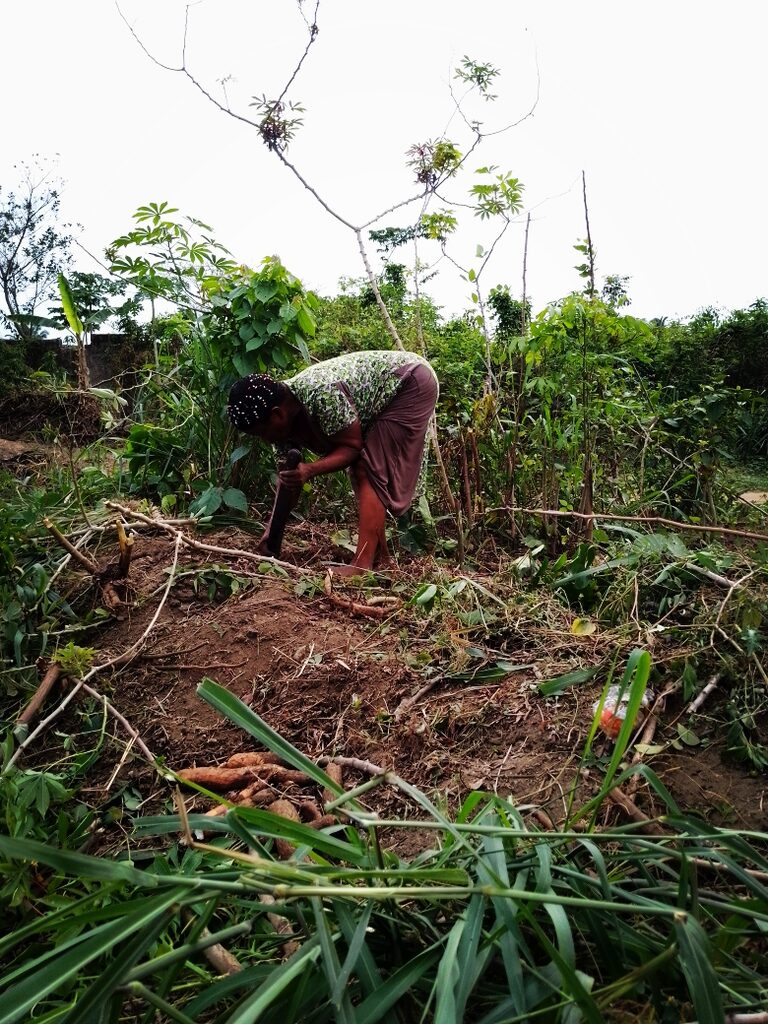 1. Harvesting cassava roots.
Photo: Kuuzy · CC BY-SA 4.0 · source
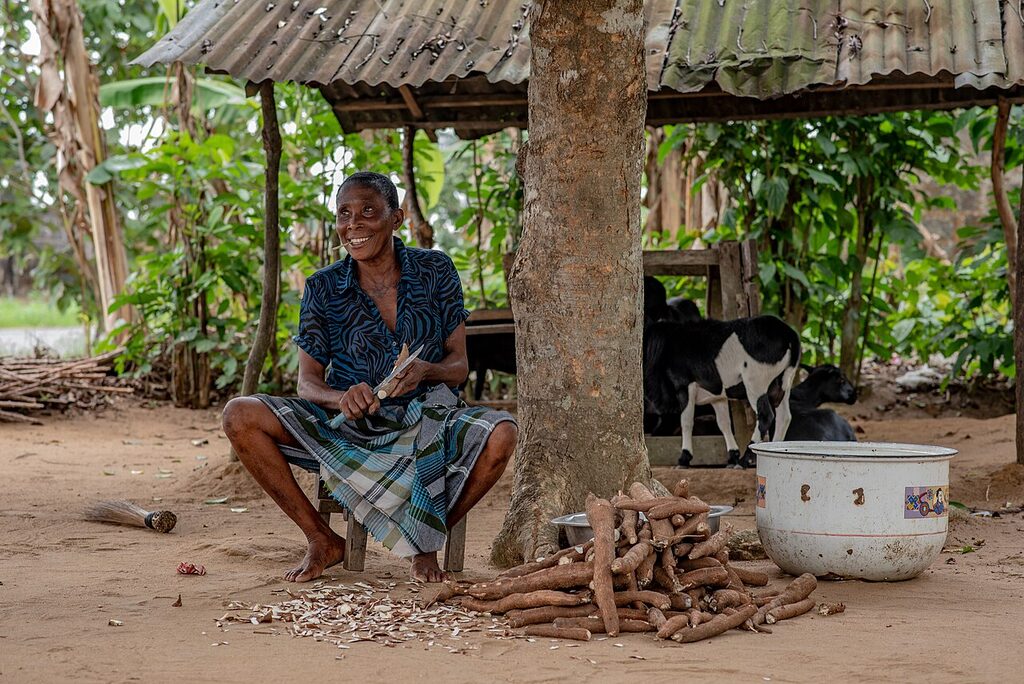 2. Peeling cassava for processing.
Photo: Dappasolomon001 · CC BY 4.0 · source
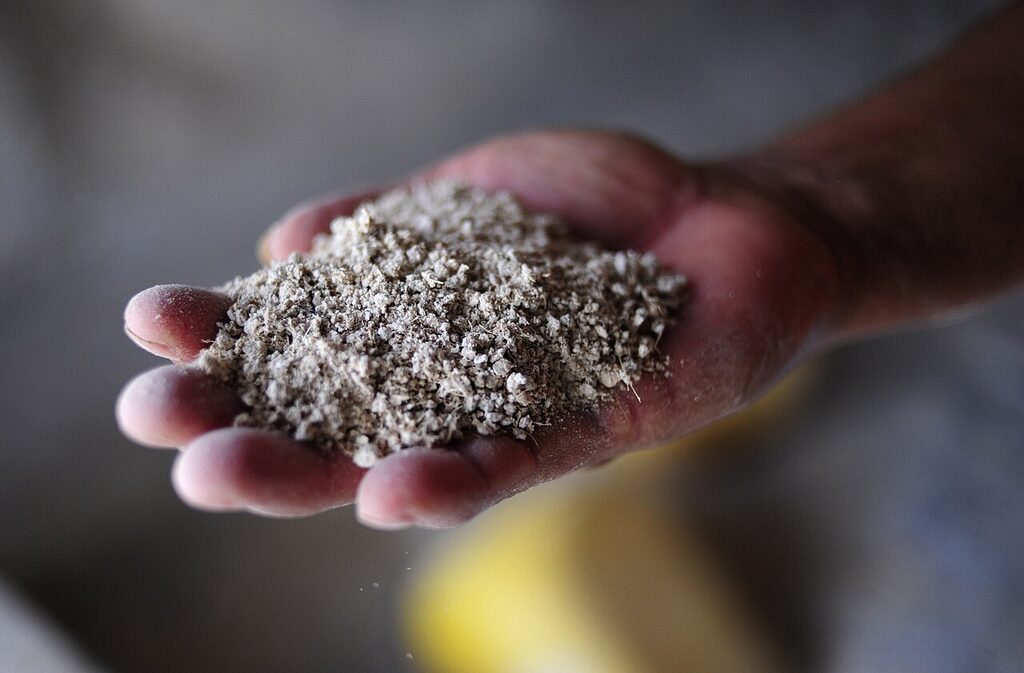 3. Cassava starch settling and drying. (Photo from Colombia.)
Photo: Neil Palmer (CIAT) · CC BY-SA 2.0 · source
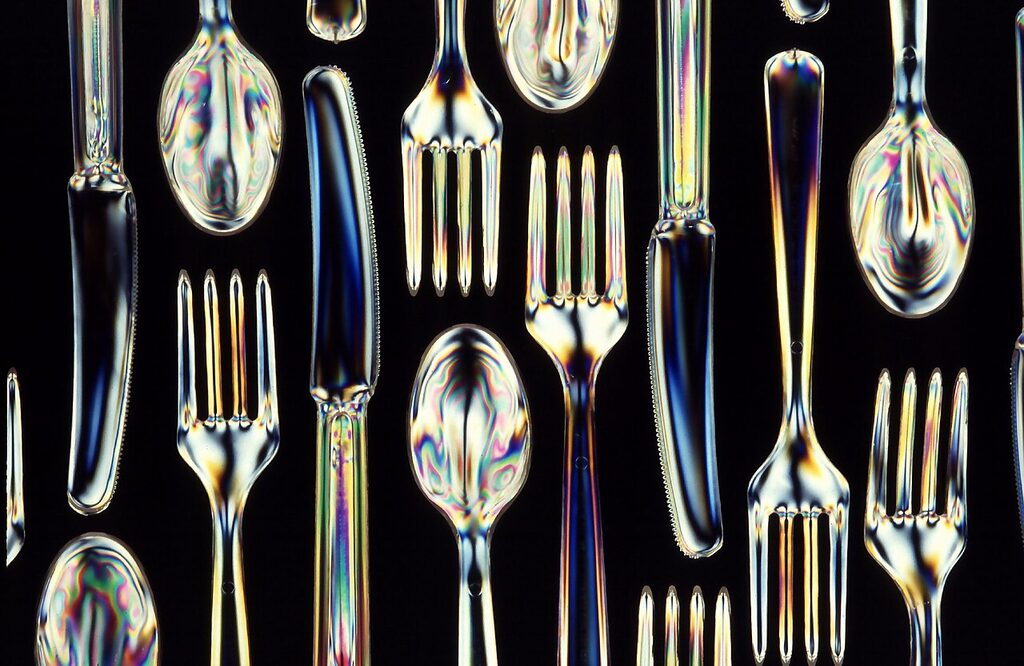 4. Knives, forks and spoons made from a starch-based plastic. (Photo from the USA.)
Photo: Scott Bauer · Public domain · source
Copy prompt for Lovable
Paste this into the Pan African Global Open Curriculum project to add this factory there.
Add an "AfroFuture Factories" world to the Pan African Global Open Curriculum: a separate Afrofuturist world next to the Made in Africa halls, with a landing page of five factory portals (Cassava to Bioplastic open; Phones, Electric Cars, Planes and a Herbal Medicine Line coming next).

First hall: "Cassava to Bioplastic".
1. Reuse the 3D factory hall (three.js, lazy, client only): walk with W A S D / arrows / on-screen buttons, drag to look, full screen, the shared welcome card, walk-to-unlock stations in order with a glowing floor arrow.
2. Paint: deep purple walls, a teal band with a gold circuit pattern, cool glowing light; page buttons in teal.
3. Same five Black technicians in futuristic suits with teal and gold trim, in a new order: Kojo (harvest), Ngozi (grate and wash), Zainab (chemist), Emeka (induction cooker), Nia (casting and testing).
4. Five hands-on games with stars, results after play, real credited Wikimedia Commons photos and a "Think about it" question:
   - Harvest: a field cross-section shows the roots underground; lift 3 plants aged 10–16 months by dragging the stem up slowly (too fast snaps the roots), then drag a knife along each root to peel it before blue-black streaks appear (about 2 days after lifting).
   - Grate and settle: rub roots on a grater, twist the cloth to squeeze out starch milk, hold to let the starch settle in layers, drag a handle to tip the water off (too far spills starch), rinse until the water runs clear (2–3 rinses).
   - Recipe bench: spoon 10 g starch onto a scale, fill a cylinder to 60 ml (read the curve), draw 2–4 ml glycerol in a syringe, squeeze 1–2 ml vinegar from a dropper.
   - Heat to a gel: turn the induction knob, stir by dragging round the beaker, keep 70–90 °C; a microscope close-up shows grains swelling and bursting as the mix turns from milky to clear; not stirring scorches it.
   - Cast: dry 24–48 hours; compare compost time (~3 months) with petroleum plastic (hundreds of years).
5. Finale: design and download a compostable product, then "Where the money goes" (1 t roots ~$60 → starch ~$150 → bioplastic ~$900 → 30,000 bags ~$3,000).
6. Work orders, lab report download, "Did you know?" cards. Mark science and prices for teacher review. Saving work is phase 2 (paid accounts).